Author: ausinch

  • Marketing and Branding: The Twin Pillars of Business Growth

    Marketing and Branding: The Twin Pillars of Business Growth

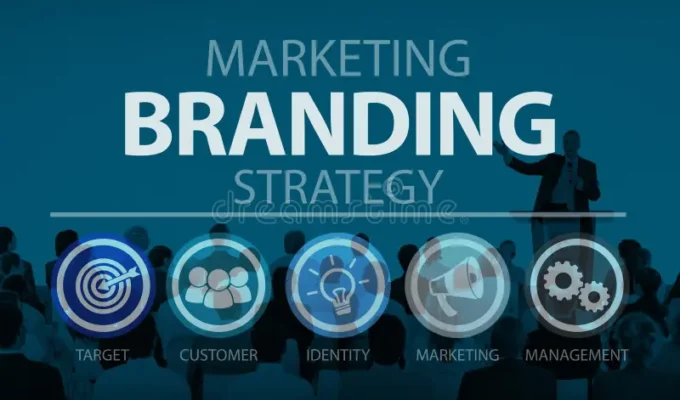
    In today’s fast-changing digital landscape, marketing and branding no longer exist as separate silos; they are deeply intertwined forces driving business success. When you get marketing and branding right, you don’t just attract customers — you build legions of loyal advocates.

    At its heart, branding is about identity: who you are, what you believe in, how you want the world to see you. Meanwhile, marketing is about expression: how you communicate your brand, how you reach people, how you convert awareness into action. Together, marketing and branding form a strategic continuum — branding gives meaning and consistency; marketing gives momentum and scale.

    Think of branding as the foundation, the underlying narrative and personality that anchors every interaction a person has with your business — from your logo to your values to your tone of voice. And think of marketing as the engine that activates that foundation — digital campaigns, content strategies, SEO, social media, email — all tools to amplify your brand, to deliver value, and ultimately, to grow.

    A company with a weak brand might run marketing campaigns that offer short bursts of results — leads, clicks, conversions — but over time those results become harder to sustain. On the other hand, a strong brand alone is just promise without reach. Only when marketing and branding work together in harmony can you build a robust, lasting presence in the market.

    From the AusInch perspective, integrating technology, design and strategic thinking is key. In their services, “Marketing & Branding” is listed alongside digital experience, integration, and software. What this suggests is that branding must live seamlessly in all digital and technical touchpoints — not just in your logo or ads, but embedded in user experience, app design, product interfaces, and systemic workflows.

    When you adopt a mindset of marketing and branding as a unified discipline, several advantages emerge:

    First, consistency. Every message, visual style, content format, campaign medium should echo the same brand promise. Whether someone lands on your website, sees your social post, or uses your app — the feeling should be unified. Branding without consistent marketing is hollow; marketing without a solid brand is noisy and forgettable.

    Second, efficiency. When branding is clear, marketing decisions become easier. You know which audiences to target, what tone to use, what creative direction fits, and how campaigns should evolve. You don’t reinvent from scratch each time; you have a framework — your brand — guiding all your marketing moves.

    Third, amplification. Strong branding makes every marketing campaign more potent: people remember your voice, your visuals, your essence. Over time, marketing efforts compound: trust, awareness, loyalty, advocacy — these build up. A brand, once ingrained in people’s minds, becomes a multiplier for marketing ROI.

    Of course, to make marketing and branding truly effective, you need strategy, measurement, and iteration. You begin with introspection: What is your mission and vision? Who are your ideal customers? What differentiates you? That is your branding groundwork. Then you craft a marketing roadmap: campaigns, channels, content, metrics. Test, learn, refine. Marketing and branding must evolve together as markets and technologies shift.


    Many agencies like AusInch blend these capabilities — offering strategy, design, engineering, and marketing & branding in one package — so that a brand is not just an external moniker but inherent in the software, product, and customer journey. In that integrated model, marketing and branding don’t just sit on top of things; they shape the very architecture of your business.

    In the end, marketing and branding are not optional extras — they are the bedrock of how your organization connects, competes, grows, and endures. Focus on making your brand real, and your marketing meaningful. Together, you’ll not only be seen — you’ll be remembered.


  • Business Intelligence (BI)

    Business Intelligence (BI)

    AusInch, a technology agency focused on digital transformation, has recognized the strategic importance of embedding business intelligence into its service offerings. On their services page, AusInch lists business intelligence under their Data & AI capabilities, positioning it as a key tool for turning raw data into actionable insight. ausinch.com By doing so, they help clients not only collect and store data but also trust and visualize it in ways that drive impact.

    One of the greatest advantages of adopting business intelligence is the speed it brings to decision-making. Executives and managers no longer wait weeks for reports—they can query, explore, and dissect data on demand. This agility helps firms stay ahead of market shifts, spot inefficiencies, and seize opportunities faster. Because business intelligence provides both historical context and real-time visibility, it serves as a bridge between what’s happened and what could happen next.

    Still, implementing business intelligence is not without its challenges. One hurdle is ensuring data quality: if the data feeding your BI system is inconsistent, incomplete, or inaccurately labeled, any insights derived will be questionable. That is why organizations must invest in strong data governance, cleansing workflows, and metadata management. Another challenge is usability: many BI initiatives falter when only technical teams can extract value. To succeed, business intelligence solutions should enable nontechnical users through intuitive dashboards, guided analytics, and drag‑and‑drop interfaces.

    AusInch approaches these challenges by weaving business intelligence into its broader enterprise solution offerings. Their experience in integrations, ERP, and automation gives them insights into how systems connect, what business metrics truly matter, and how BI can be embedded into existing workflows rather than treated as a standalone project. ausinch.com In other words, they don’t simply deliver BI modules—they help clients operationalize intelligence.

    Another compelling aspect of business intelligence is its role in predictive and prescriptive insights. While classical BI asks “what happened” and “what is happening,” the next frontier is answering “what will happen” and “what should we do.” Modern analytics platforms, often layered on top of business intelligence frameworks, apply machine learning and statistical models to forecast demand, anticipate customer behavior, and recommend optimized actions. The interplay of business intelligence with predictive analytics turns data from retroactive reporting into forward-looking opportunity.

    As organizations mature in their BI journey, they also recognize the necessity of democratizing access to insights. When decision-making power flows downward, teams across marketing, operations, HR, and product can explore the same dataset from their vantage points. This democratization amplifies agility and accountability. However, it places responsibilities on design teams and BI architects: the interfaces should prevent misuse, enforce security, and balance freedom with governance.

    Moreover, businesses that fully harness business intelligence find that it acts as a catalyst for digital transformation. As data becomes central to strategy, legacy processes are rethought, organizational structures evolve, and a culture of measurement takes hold. Business intelligence becomes not just a tool, but the backbone of how the enterprise learns, adapts, and grows.

    In closing, in an era where data is abundant but insight is scarce, business intelligence offers a route to clarity, foresight, and competitive edge. When guided by experienced partners like AusInch who understand integration, automation, and analytics, business intelligence becomes a living, breathing part of how business is done — not just a reporting function but a strategic asset.

  • Enterprise solution

    Enterprise solution

    In today’s hyperconnected world, every organization — whether it’s a mid-sized business or a global conglomerate — faces challenges of scale, complexity, and integration. The idea of an enterprise solution has grown from being a luxury to becoming essential. An enterprise solution isn’t just software; it’s a holistic architecture that synchronizes systems, processes, data flows and user experiences across the business ecosystem.

    When we speak of an enterprise solution, we refer to the ecosystem that links together enterprise resource planning (ERP), supply chain management, customer relationship management (CRM), business intelligence, content management systems, and other mission-critical modules under a unified umbrella. The real power of an enterprise solution lies in its ability to orchestrate data exchanges, integrate web services, provide global platform support, and adapt to ever-evolving business needs. In fact, as AusInch states, “Data exchanges, integrations, web services, global platforms — we thrive on tough challenges.”

    An effective enterprise solution operates at multiple levels. At the technology layer, it enables APIs, microservices, middleware, and secure data pipelines. At the business layer, it maps out workflows, defines governance and standard operating procedures, and ensures consistency across departments. At the strategic layer, the enterprise solution must align with organizational goals, support scalability, and adapt to shifts in market or regulation.

    One of the first challenges many enterprises face is legacy systems and siloed data. Departments often run on isolated applications, creating data duplication, inconsistency, and friction when trying to share insights. An enterprise solution must reconcile these silos, bringing a unified data model and enabling seamless integration. It must transform fragmented legacy systems into a cohesive infrastructure that supports real-time analytics, cross-department workflows, and unified dashboards.

    Another critical factor is extensibility. As business requirements evolve, an enterprise solution should support modular extensions, plug-ins, third-party integrations, and scalable cloud services. It should allow easy addition of features like IoT, AI/ML, mobile access, or external partnerships without requiring a complete overhaul.

    Security, of course, must be foundational. An enterprise solution must enforce identity and access management, role-based permissions, data encryption, and compliance controls at every touchpoint — from APIs to user interfaces to backend databases. Because when data flows across systems — for example from CRM to ERP, or from supply chain modules to logistics partners — every node is a potential vulnerability.

    The benefits of adopting a strong enterprise solution are manifold. You gain operational efficiency by eliminating redundant processes, you enable better decision making through unified dashboards and analytics, and you improve agility to respond to business changes quickly. Moreover, by having a scalable backbone, your enterprise is better prepared for expansions, new markets, or digital transformations.

    AusInch, for instance, offers enterprise solution as one of their core services, alongside software development, integration & automation, and digital experience. Their approach underscores that enterprise solution is not isolated: it must coexist with design, development, marketing, and support to deliver full business value.

  • SOFTWARE DEVELOPMENT

    SOFTWARE DEVELOPMENT

    When you hear “software development,” you might think of lines of code, stacks and frameworks, or teams huddled around glowing monitors. But beneath those technical terms lies a much deeper story: one of creativity, collaboration, and transformation. Just as a simple recipe becomes a comforting meal in the hands of a cook, software development is the art of taking raw ideas and turning them into experiences people live with—and love.

    From the moment an idea is born, the journey of software development begins. Someone spots a problem—a process that’s slow, a service users struggle with, or a need that’s unmet—and imagines a better way. That spark is the seed. What follows is a delicate blending of vision, design, strategy, and execution. In software development, you don’t just build features; you build meaning.

    As the project moves forward, software development becomes a constant dance between creating and refining. Interfaces are sketched, prototypes are tried, feedback pours in, and revisions follow. Engineers write code, test modules, fix bugs, and integrate across components. Yet even then, software development is not about perfect from day one—it’s about iteration. Each release teaches lessons, surfaces hidden issues, and reveals new opportunities.

    One of the beautiful truths about software development is how merged knowledge from different disciplines makes the difference. The people who understand business logic, those who know user behavior, the ones skilled in performance tuning—when they collaborate, the result is richer. In that confluence lies the strength of software development: solving real problems in sustainable ways.
    Over time, as the system grows, scaling becomes a test. New users arrive, new modules need weaving in, loads rise, external services shift. At that stage software development is less about fresh features and more about resilience, refactoring, optimization, and maintenance. While adding features brings growth, software development also means pruning, cleaning up technical debt, ensuring that the foundations remain solid.

    Even when a product “launches,” software development isn’t over. The digital environment evolves—platform standards change, security vulnerabilities emerge, user expectations shift. What was cutting-edge can feel clunky a few months later. The role of software development is to adapt—to listen to metrics, feedback, logs, and make the product continuously better. In that, software development becomes a living, breathing process.

    What captivates me about software development is how it weaves together human ambition with technical discipline. Every line of code, every database schema, every API call is a thread in a tapestry. When those threads align, you get software that doesn’t just work—but resonates. That resonates through delight, reliability, speed, and usefulness.

    If your business or product is seeking to evolve, the path through software development is not always easy—but it’s the path forward. Embrace it not as a one-time project, but as a commitment. In doing so, you allow your ideas not just to be coded—but to grow, to live, to transform how people work, play, connect, and dream. That, at its heart, is the promise of software development.

  • The Art of Product Design: Where Ideas Meet Experience

    The Art of Product Design: Where Ideas Meet Experience

    Product design isn’t just about drawing nice shapes or picking pretty colours—it’s the heartbeat of innovation, the magic that turns an idea drifting in someone’s head into something real, useful, and beautiful. When done right, it’s invisible: you barely notice how effortless it feels. But behind that seamless flow is discipline, empathy, craft, and a relentless focus on solving real problems.

    At its core, product design weaves together form, function, and experience. It begins with listening—truly understanding what users need, what frustrates them, where they hesitate, and what delights them. Only after the questions are asked and the shadows of uncertainty explored can a designer begin to sketch. Once those first lines are drawn, it’s a dance: balancing aesthetics with usability, ingenuity with practicality, vision with constraint.

    But product design is not a solo act. It thrives in collaboration. Designers, engineers, product managers, stakeholders—all bring parts of the puzzle. A thoughtfully designed product is born from dialogue: design critiques, prototypes tested, feedback integrated, failures embraced. Often, what looks like perfection is in fact a journey through many versions, many drafts, many moments of letting go of what seemed perfect to chase something better.

    Technology plays its role too: tools that let us prototype fast, simulate interactions, test across devices. And as devices evolve—smartphones, wearables, voice-interfaces—the domain of product design expands. The designer’s canvas is no longer flat; it’s ambient, responsive, spatial, even conversational.

    At Ausinch, for example, product design isn’t a stage you pass through. It’s woven into how they think—every enterprise solution, every digital experience is shaped by design insights. It means constantly asking: “What does good look like from a user’s perspective? What does it feel like?” And then shaping every decision around those questions.

    If you’re stepping into product design, don’t wait for inspiration; seek understanding. Talk to users. Build rough, fail fast. Listen more than you draw. Refine, polish, simplify. The elegance you strive for doesn’t lie in ornamentation, but in clarity, in courage to leave out what doesn’t serve, and in relentless shaping of what does.

    Because in the end, a well-designed product isn’t just something people use—it’s something people want. It becomes part of their routine, something they trust without thinking, something that fits so well it feels like it was made just for them.

  • Data Engineering: Crafting the Silent Symphony of Data

    Data Engineering: Crafting the Silent Symphony of Data

    magine a bustling city where every street, alley, and skyscraper hums with life. Traffic flows seamlessly, deliveries arrive on time, people move with purpose. Now envision what happens when the grid falters—congestion rises, blockages form, chaos ensues. In the world of information, data engineering is the master architect ensuring that every byte finds its way precisely where it should, exactly when it should, orchestrating a silent symphony of insight.

    The Pulse Behind Smart Decisions

    Data engineering is the invisible hand behind the vivid dashboards, real-time alerts, and AI-powered recommendations we now take for granted. When you spot a seamless online checkout, a smart traffic system, or a tailored video recommendation, that’s not fairy dust—it’s data engineering in action. It’s the science of transforming raw, disparate data into a polished, useable format—reliable pipelines, clean lakes, refined warehouses—that analysts and AI models can confidently consume.

    The Art of Data Storytelling

    Just as an editor refines prose, a data engineer sharpens raw feeds into refined narratives. They blend structures, smooth inconsistencies, and preserve the heartbeat of the original data while molding it for clarity. It’s craftsmanship: designing logical models, ensuring quick reads, building partitioning strategies for blazing-fast queries, and crafting a foundation that scales with ambition.

    Where Magic Meets Machine

    But the power of data engineering isn’t just technical—it’s transformative. A healthcare startup uses clean, unified records to predict patient risks; a retailer spots trends turning viral in real time; a city optimizes its energy grid by reading patterns in consumption. Without meticulous engineering, these sparks of insight would be smothered in noise.

    It’s a daily dance between precision and experimentation. Engineers tame chaos with orchestration tools like Airflow and Prefect. They ensure data integrity through validation frameworks. They monitor and trace lineage so that when anomalies surface—late-arriving data, schema shifts—they can trace them back to the source and diagnose with clarity.

    An Ever-Evolving Metropolis

    In an era where data doubles like clockwork and flows in torrents, data engineers aren’t just builders—they’re urban planners, surveyors, and sustainability experts all rolled into one. They design for scale, knowing traffic spikes will come; they build for flexibility, anticipating new sources springing up overnight; and they uphold resilience, so even if a node fails or chaos strikes, the data keeps flowing without missing a beat.

    This isn’t template work. It’s a creative puzzle, balancing the elegance of design with the grit of infrastructure. Engineers craft ETL (extract-transform-load) workflows or turn the dial to ELT, deploy schema registry guards, sculpt real-time streaming architecture, and weave in reliable data contracts that keep the machine humming across teams and tools.